
The One I Nearly Walked Past
Extra-Large Scandinavian Art Glass Paperweight
This was one of those finds that almost slipped through my fingers. Sitting quietly on a shelf, it looked like just another decorative glass object until I picked it up. The weight immediately caught my attention, followed by the beautiful hand-blown decoration suspended within the crystal-clear glass. Although technically an extra-large paperweight, it has all the presence of a sculptural art glass object. The rich cobalt blue base, organic coral-red and black inclusions, and clear controlled bubbles create the impression of an underwater landscape frozen in time. Pieces like this remind me that experience isn’t just about recognising famous names. Sometimes it’s simply knowing when an object deserves a second look. Had I walked on, this beautiful piece of Scandinavian glass would still have been waiting for someone else to discover it.

My Favourite Find
Mason’s Vista Sauce Tureen, Blue & White Ironstone Serving Dish, England
Some finds stop you in your tracks, and this Mason’s Vista sauce tureen was one of them. Produced in England in the timeless Vista Blue pattern, it is a wonderfully complete set with its matching stand, cover and original ladle still together after decades of use.
Mason’s has long been celebrated for its richly detailed transferware, and the Vista pattern is one of the firm’s most recognisable designs. The intricate rural landscapes, framed by elaborate floral borders, reflect the Victorian love of romantic scenery and beautifully decorated dining tables.
Complete serving pieces like this are becoming increasingly difficult to find. Lids, stands and ladles were often damaged or separated over the years, making intact examples particularly desirable to both collectors and those who enjoy decorating with classic English blue and white ironstone.
This was my favourite discovery of the week. It isn’t just a beautiful object, it’s a reminder of a time when even everyday dining was presented with elegance, craftsmanship and attention to detail. Finding a complete survivor like this is exactly what makes treasure hunting so rewarding.Made from moulded plastic with a tubular steel frame, pressed steel wheels and pedal-driven mechanism, it is a wonderful example of post-war European children’s design. Toys like these were built for durability rather than disposability, often becoming treasured family heirlooms passed from one generation to the next. This example still retains its original racing number and much of its original character despite decades of use. Discoveries like this are becoming increasingly difficult to find, especially in such complete condition, and it immediately caught my eye amongst a room full of furniture. It will now be carefully researched, cleaned and prepared before finding a new home with someone who appreciates its history as much as I do.

Something Unexpected
Mid-Century Dressing Table Stool in the Style of Gio Ponti
This charming dressing table stool was one of those unexpected finds that instantly made me smile. Dating from around the 1950s or 1960s, it combines a delicate painted tubular steel frame with a wonderfully tactile long-haired sheepskin seat, creating a look that feels both playful and sophisticated.
The clean, lightweight frame and sculptural simplicity are reminiscent of the work of Italian designer Gio Ponti, whose elegant furniture helped define post-war modernism. While I cannot attribute this stool to Ponti himself, it captures the same sense of lightness and refined proportion that made his designs so influential.
Pieces like this are a reminder that great design isn’t always loud. Sometimes it’s a simple combination of honest materials, practical function and beautiful form. Whether placed beside a dressing table, in a bedroom or used as an occasional stool, it has the kind of timeless character that works just as well today as it did over half a century ago.

A Piece of Swedish History
The Rise of the Swedish Ryamatta
One of the textiles that has become synonymous with Swedish interiors is the ryamatta, or rya rug. Originally developed centuries ago as warm, thick woollen bed coverings for sailors and farming families, the rya evolved during the 20th century into one of Sweden’s most recognisable forms of interior design.
By the 1960s and 1970s, Swedish designers embraced bold colours, geometric patterns and deep, luxurious pile, transforming the traditional rya into a modern statement piece. Olive green, chocolate brown and cream, like those seen in this example, became popular colours of the era, reflecting the natural palette that defined Scandinavian homes.
Today, vintage Swedish rya rugs are appreciated not only for their warmth and craftsmanship but also as icons of mid-century Scandinavian design. Each one was hand-knotted, giving it a unique character and texture that simply cannot be replicated by mass production.
This rug is a wonderful reminder that Swedish design has always balanced beauty with practicality. It wasn’t created as a museum piece, but as something to be lived with every day, bringing warmth, comfort and colour into the home. That’s one of the reasons I enjoy finding and sharing pieces like this. They tell the story of how ordinary Swedish homes looked and felt during a remarkable period of design history.
Hidden History
More Than Just a Ceramic Seagull
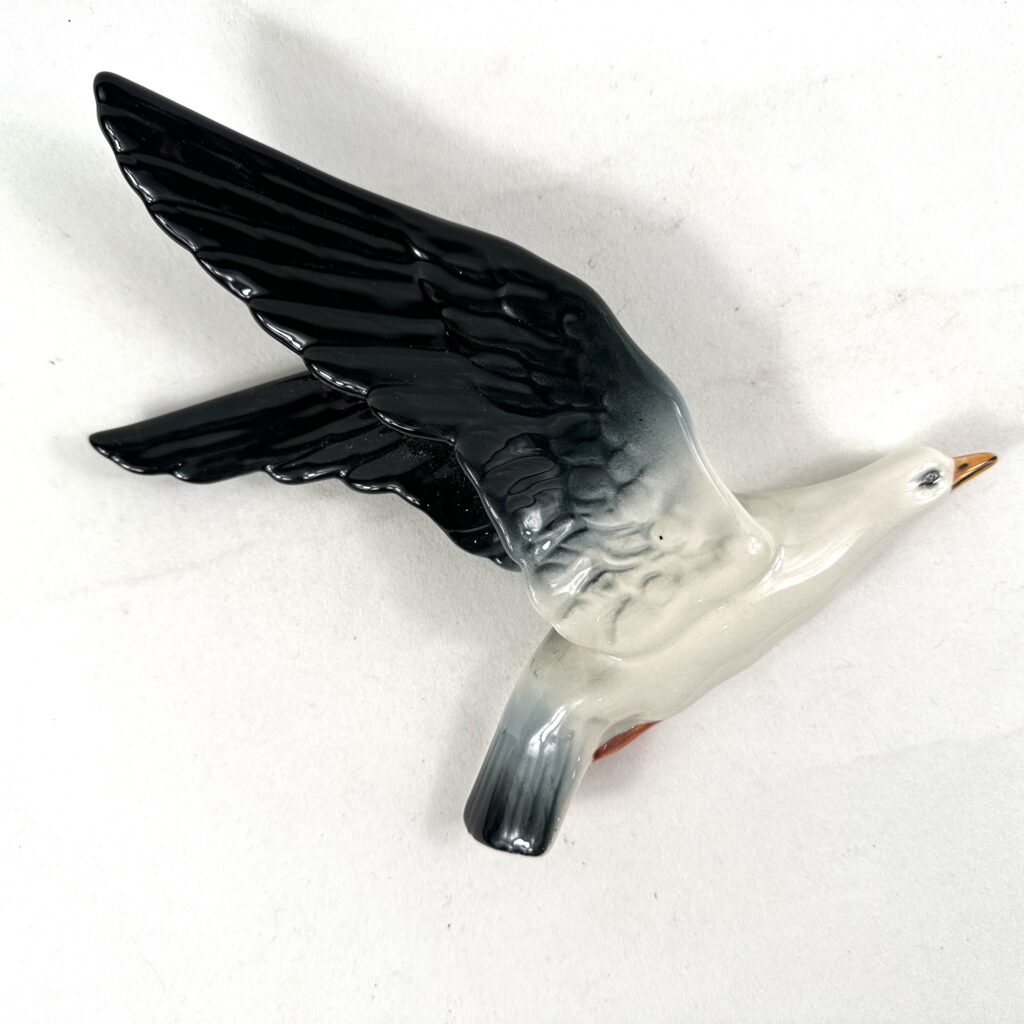
At first glance, this might look like just another ceramic wall bird, but the name behind it gives it a heritage to be proud of.
Made by Beswick of England, one of Britain’s most celebrated pottery manufacturers, this flying seagull represents the quality and craftsmanship that made the company famous throughout the twentieth century. Founded in 1894 in Stoke-on-Trent, Beswick became renowned for producing beautifully modelled animals, birds and equestrian figures, many of which are now highly sought after by collectors around the world.
This particular seagull dates from the post-war years, when Beswick’s wall-mounted birds became a familiar sight in homes across Britain. Designed with graceful, lifelike movement and hand-painted detail, they brought a touch of nature indoors and remain icons of British ceramic design today.
Finding one hanging on the wall of a Swedish loppis was a lovely surprise. It reminds us that antiques rarely stay where they were made. Over the years they travel from home to home and even across countries, quietly collecting new stories along the way.
To me, this isn’t simply a ceramic bird. It’s a small piece of British design history that somehow found its way to Sweden, and I hope it will soon begin another journey with a new owner.
Thank you for joining me on this week’s treasure hunt.
Every Friday, I’ll be sharing five new discoveries, unexpected stories, and forgotten pieces of history uncovered during my adventures through Sweden’s auctions, estate sales, and loppisar.
I hope you’ll visit again next Friday to see what treasures and stories I’ve uncovered.
Amanda.