
The One I Nearly Walked Past
Sven Olsson’s Cat Portrait, 1977
This gentle drawing of a long-haired cat, signed by Swedish artist Sven Olsson and dated 1977, was one of those finds for me. The soft pencil work brings out the cat’s calm expression and wonderfully fluffy coat, while the simple composition lets the personality shine through. I can easily imagine it hanging in a cosy cottage, a reading corner, or a home where cats have always been part of the family. Discoveries like this remind me that vintage isn’t always about famous names or grand statements. Sometimes it’s simply about finding a piece that makes you smile.
My Favourite Find
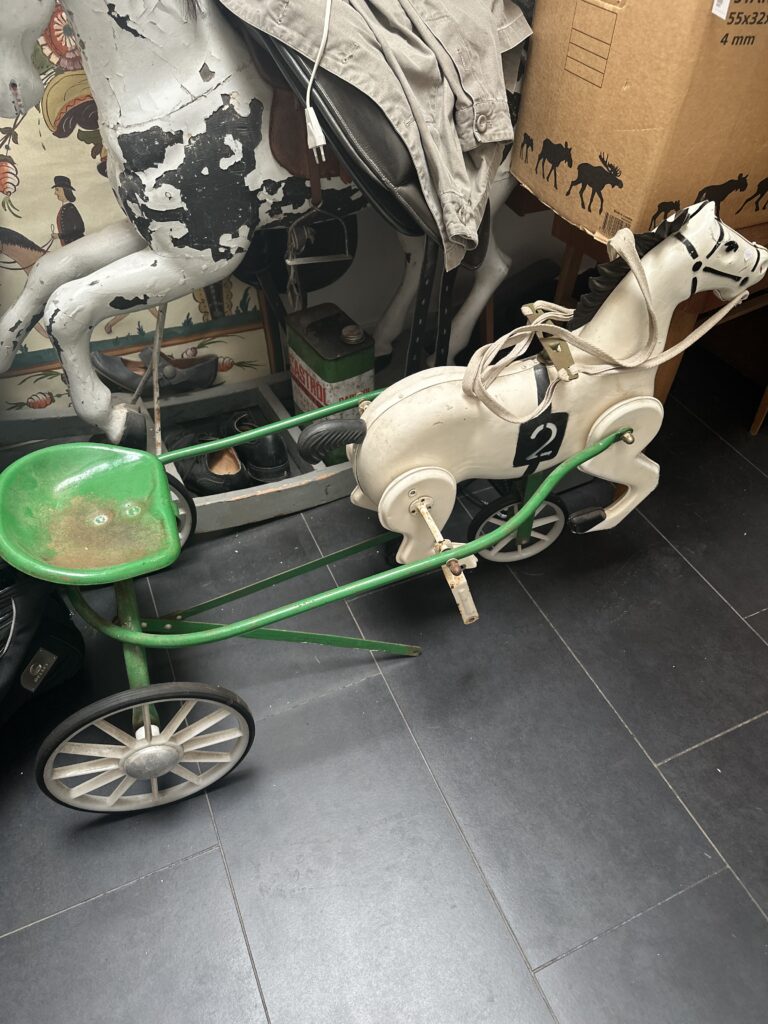
My favourite find this week is this charming vintage pedal horse and cart, dating from approximately the 1950s or early 1960s.
Made from moulded plastic with a tubular steel frame, pressed steel wheels and pedal-driven mechanism, it is a wonderful example of post-war European children’s design. Toys like these were built for durability rather than disposability, often becoming treasured family heirlooms passed from one generation to the next. This example still retains its original racing number and much of its original character despite decades of use. Discoveries like this are becoming increasingly difficult to find, especially in such complete condition, and it immediately caught my eye amongst a room full of furniture. It will now be carefully researched, cleaned and prepared before finding a new home with someone who appreciates its history as much as I do.

Something Unexpected
Vintage Upholstered Window Bench, Contemporary Country House Style
One of the unexpected discoveries this week was this beautifully upholstered window bench. Although a relatively modern piece, probably dating from the early 2000s, it immediately stood out for its cheerful mix of floral and paisley fabrics, rolled arms and traditional turned legs. Designed in the classic window or bedroom bench style, it combines practical seating with an unmistakably English country house character.
It’s not the sort of item I usually expect to find whilst hunting for Scandinavian antiques, but that’s part of the attraction of visiting Swedish loppisar and estate sales. Every now and then something appears that simply deserves to be rescued. Well made, full of personality and ready for another home, this bench proves that collecting isn’t always about age. Sometimes it’s about recognising quality, craftsmanship and timeless appeal wherever you find it.

A Piece of Swedish History
Late 19th Century Swedish Rococo Revival Gilt Mirror
Among all the pieces I’ve brought home over the years, some simply refuse to leave. This beautifully carved gilt mirror is one of them. Made in Sweden during the late 19th century, it reflects the enduring popularity of the Rococo Revival style, with its flowing acanthus leaves, shell motifs and richly ornamented crest inspired by 18th-century Swedish interiors.
When I found it, I knew immediately it wasn’t destined for the shop. Instead, it now hangs in our guest bathroom, where it has completely transformed the room. It’s a reminder that antiques don’t have to live in grand houses or formal settings. They can bring warmth, history and character to the spaces we use every day.
Working with vintage has taught me that some objects are worth more than their market value. They become part of your own story. This mirror is one of those pieces, and I hope it will stay with us for many years to come.


Hidden History
Mid-Century Dutch Button Sample Boards
One of the more unusual finds this week was this pair of original button sample boards, produced in the Netherlands during the mid-20th century. These weren’t made as decorative displays but as working sales samples, carried by travelling representatives who visited clothing manufacturers and tailors with the latest button designs, colours and finishes.
Each board presents a carefully selected range of buttons mounted on original fabric swatches, complete with product numbers and fashion illustrations that reflect the clothing styles of the period. They offer a fascinating snapshot of post-war textile production and the commercial side of the fashion industry, where every detail, from the colour of a button to the texture of a fabric, played an important role in garment design.
Objects like these rarely survive because they were intended as practical business tools rather than collectibles. Today they have become wonderful examples of industrial design and fashion history, preserving a small but often overlooked chapter of European manufacturing.
Thank you for joining me for the first of my weekly treasure-hunt posts. Each week, I’ll be sharing new discoveries, unexpected stories and forgotten pieces of history that have found their way to me. I hope you’ll visit again next Friday to see what I uncover on my next adventure through Sweden’s auctions, estate sales and loppisar.
Amanda.