Our guide to understanding what your bear is really worth
Whether you are a dedicated collector of antique teddy bears or have simply discovered one tucked away in a cupboard or passed down through family, understanding its value is both fascinating and important.
Some antique teddy bears are worth a few pounds. Others have sold for thousands. The challenge is knowing the difference.
In some cases, a bear’s value can be significant enough to warrant updating your home insurance. In others, the real worth lies in its history, character, and the quiet story it carries with it.
Either way, knowing what to look for is where the journey begins.
What Defines an Antique Teddy Bear?

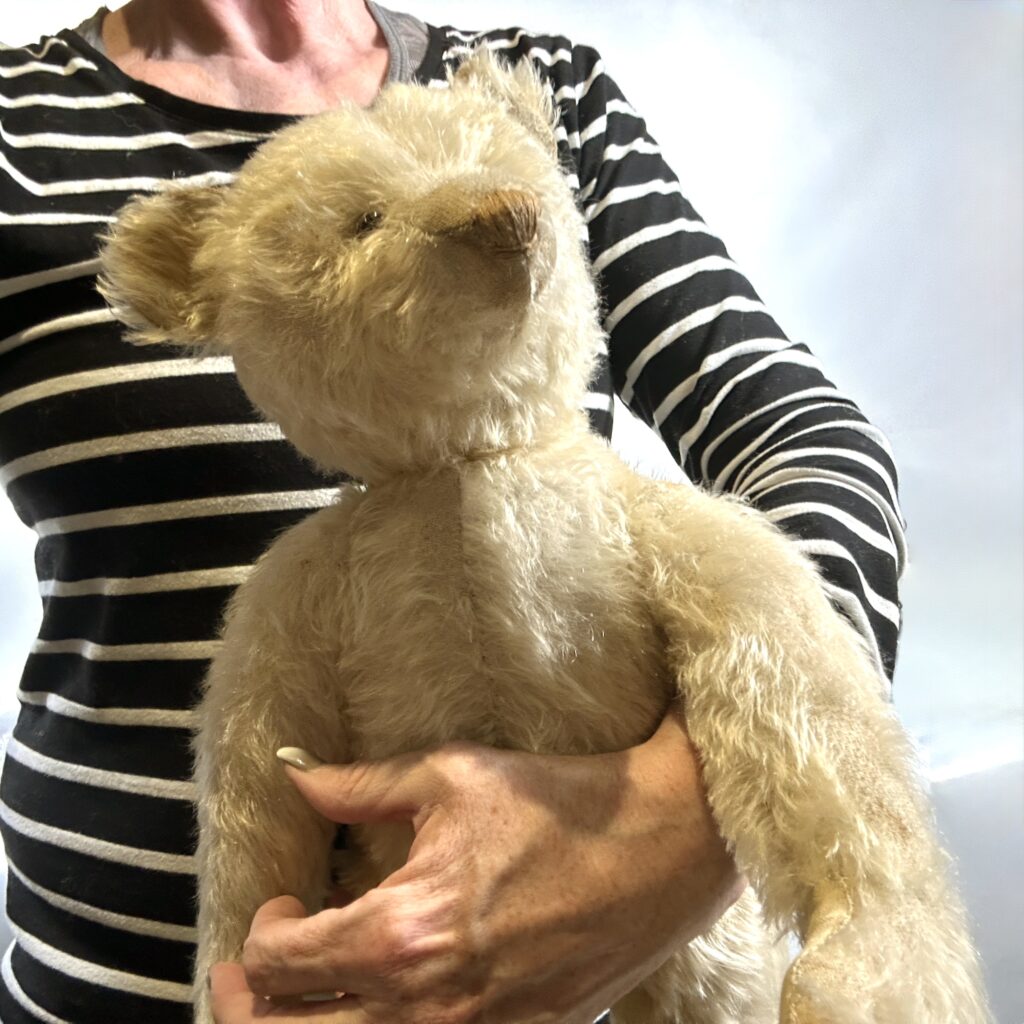
Traditionally, an antique teddy bear was considered one made before the Second World War. Today, that definition has softened, and you will often hear the term vintage used to describe bears from the 1950s and beyond.
This shift reflects a growing appreciation for mid-century bears, particularly as many beautifully made and highly collectible examples were produced during this period.
A good example is the Merrythought “Cheeky Bear,” first introduced in 1957. So popular was this design that production continued for decades, and these bears still command strong prices today.

The line between antique and vintage may blur, but what matters most is not just age… but desirability, condition, and craftsmanship.
The Value of Your Bear
Value is rarely about one single factor. Instead, it is a combination of clues that, when read together, begin to tell a story.
Before assigning any value, ask yourself:
How old is the bear?
Is it made by a known manufacturer?
What condition is it in?
Does it have any unusual or desirable features?


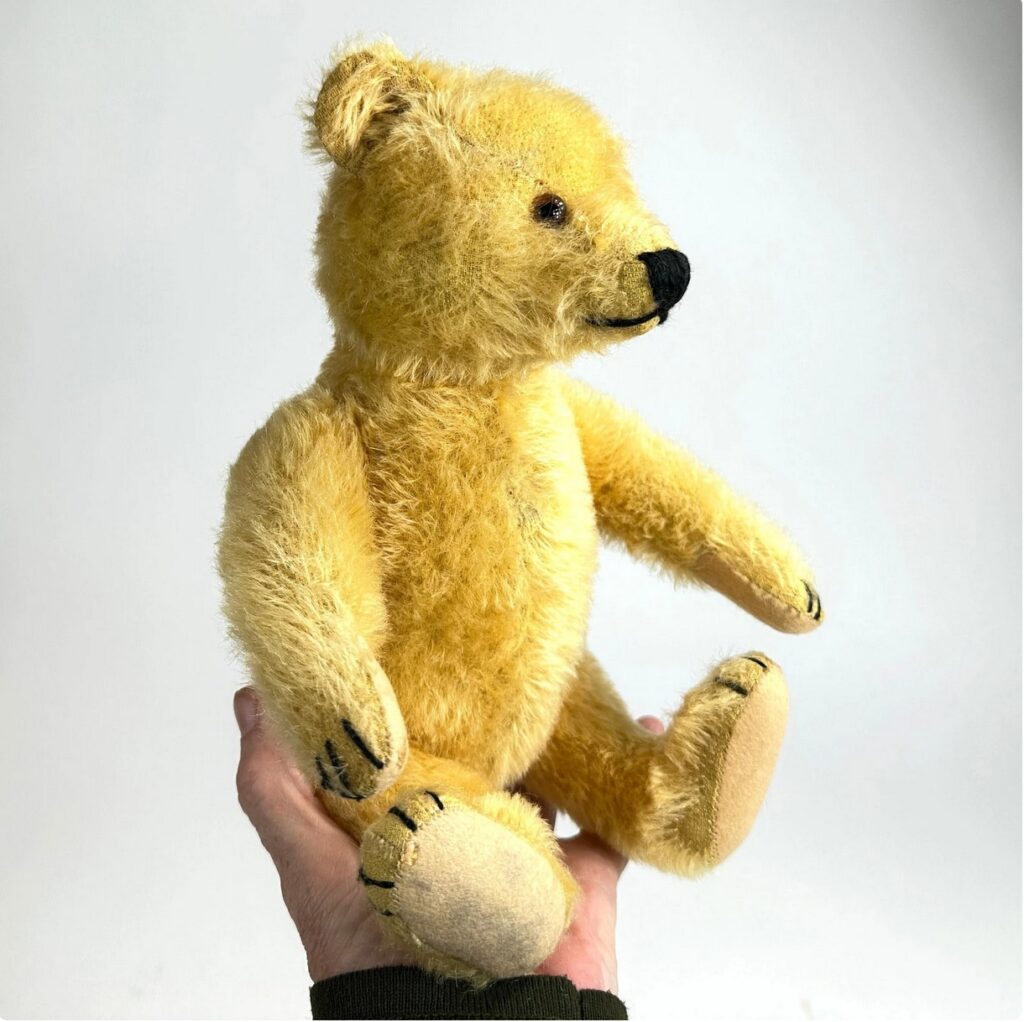
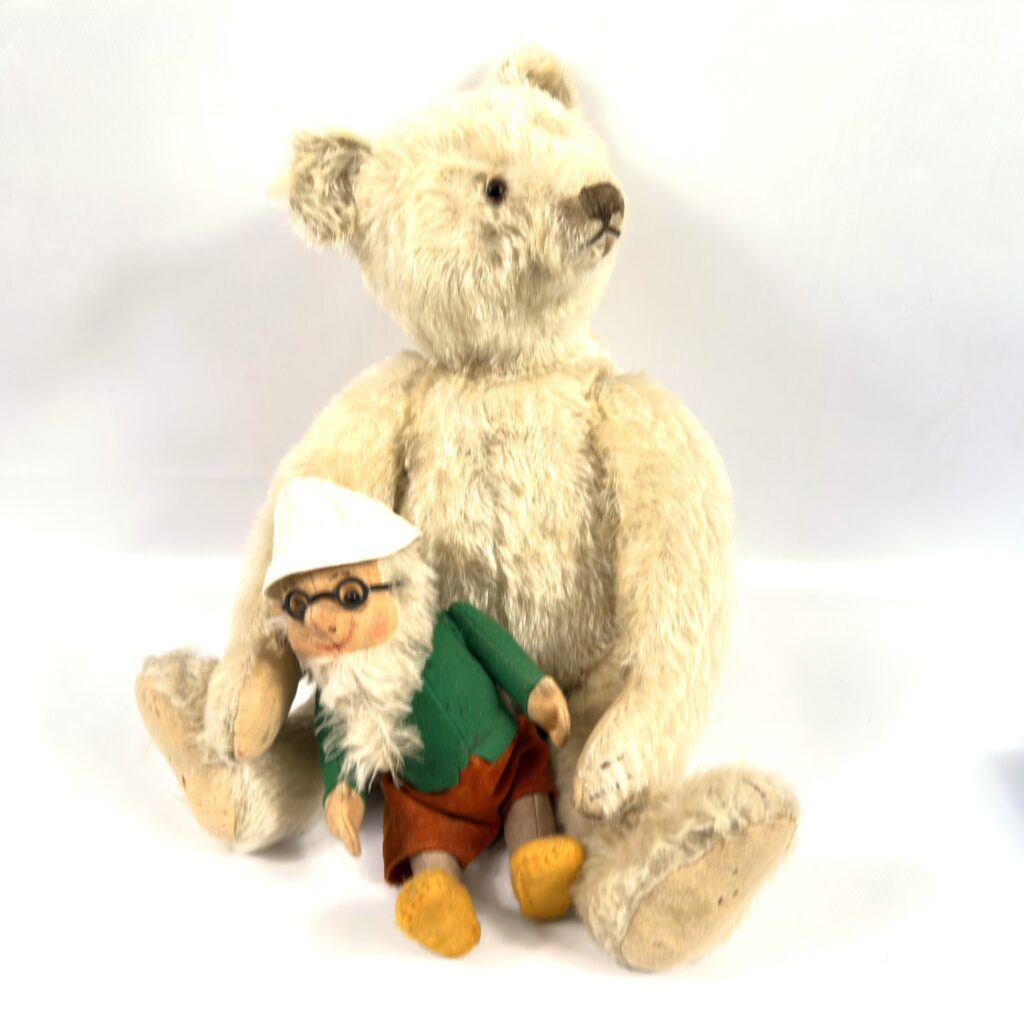
A trained eye can often estimate age and origin within minutes. But even without that experience, there is a great deal you can uncover yourself with a little time and careful observation.
Whether you are a dedicated collector of antique teddy bears or have simply discovered one tucked away in a cupboard or passed down through family, understanding its value is both fascinating and important.
You may be pleasantly surprised.
In some cases, a bear’s value can be significant enough to warrant updating your home insurance. In others, the real worth lies in its history, character, and the quiet story it carries with it.
Either way, knowing what to look for is where the journey begins.
And sometimes, that journey begins with the material itself.
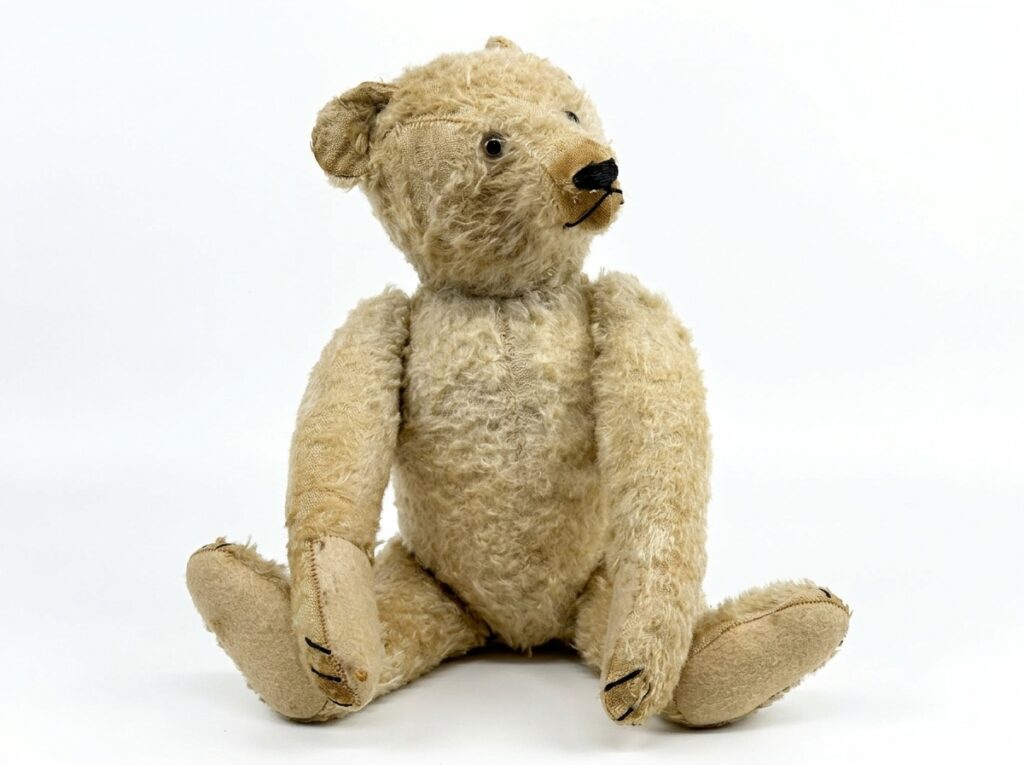
While mohair is the most recognised covering for early teddy bears, it is not the only one. During certain periods — particularly when materials were scarce — some bears were made using alternative fabrics such as burlap.
These pieces often have a very different character. The texture is coarser, the appearance more rustic, and the wear over time takes on a completely unique quality.
They may not always fit the traditional image of a teddy bear, but they carry their own history and can be highly interesting to collectors, especially when they remain in original condition.

In contrast:
Artificial silk began appearing around the 1930s
Synthetic plush and fillings became more common in the 1950s
Inside the bear, fillings also tell a story:
- Early bears were often stuffed with wood wool (excelsior)
- Some of the earliest examples even used cork-like materials
- By the 1920s, kapok was introduced, giving a softer, more huggable feel
- Wartime bears may contain mixed or unusual fillings due to shortages
Each material is a timestamp stitched into the bear itself.
The Growler: A Hidden Voice
Many antique bears contain a growler or noise box.
Early growlers were tilt-operated and quite heavy
Later versions worked by pressing the tummy
Even when broken, they can still provide valuable clues. A faint internal movement or weight can hint at what once sat inside.
These small mechanical details often help narrow down both age and manufacturer.
Condition: The Greatest Influence on Value


This is one of the most important truths in bear collecting:
Two seemingly identical bears can have dramatically different values simply because of condition. A bear in excellent condition will always be worth significantly more than one showing heavy wear.
Look for:
Fabric wear or thinning
Holes or repairs
Missing parts (eyes, pads, stitching)
General structure and firmness
Minor signs of age are expected and often appreciated. But:
A heavily repaired bear may be worth a fraction of a similar example in original condition
Dirt, damage, or missing components can dramatically reduce value
And importantly:
Old does not automatically mean valuable
A tired, poorly preserved bear may hold charm, but not necessarily market value.
Minor signs of age are expected and often appreciated. But:
A heavily repaired bear may be worth a fraction of a similar example in original condition
Dirt, damage, or missing components can dramatically reduce value
When Rarity Changes Everything
Occasionally a bear becomes valuable for reasons that have little to do with condition. Historical significance, rarity, and provenance can transform an otherwise worn example into an extraordinary collector’s piece.
A perfect example is the Steiff Titanic Bear.

These bears were produced in very limited numbers around 1912 and are directly tied to one of the most well-known historical events in the world. Because of this:
Even worn or imperfect examples can command extraordinary prices
Rarity and historical significance can outweigh condition
This is where collecting moves beyond simple grading and into something deeper:
Desirability, story, and scarcity begin to take over
Market Reality: Buying and Selling
In today’s market, buying antique bears can be both rewarding and unpredictable.
Unlike modern purchases, value does not immediately depreciate. With the right knowledge and timing, antique bears can hold or even increase in value over time.
However, success comes down to:
Research
Understanding makers and periods
Choosing pieces that genuinely appeal to collectors
Antique markets, fairs, and specialist dealers remain some of the best places to learn.
And when chosen well, a bear can offer:
Years of enjoyment
Beautiful memories
And occasionally, a financial return
More Than Value
While price is important, it is rarely the whole story.
Many collections begin with a single childhood bear. Over time, they grow into something much more personal… a collection shaped by memory, emotion, and discovery.
If you are just starting out:
You don’t need to spend a fortune.
You simply need to choose well… and choose something you love.
Final Thoughts
Valuing an antique teddy bear is part knowledge, part instinct.
The more you look, the more you begin to see:
The way a nose is stitched
The shape of a head
The feel of the fabric
The quiet signs of age


And once you learn how to read it…
you’ll never look at them in quite the same way again.
This is the first in a series of six articles exploring antique teddy bears — their history, materials, value, and the small details that make each one unique.
In the next article, we’ll take a closer look at how to identify an antique teddy bear, with a simple step-by-step guide to recognising age, maker, and value.
At All Things Retro Store we regularly source antique and vintage teddy bears from Britain, Germany, Scandinavia, and beyond. Each bear is carefully researched and photographed, with an emphasis on originality, condition, and character.
Browse our latest arrivals and discover the bear that speaks to you.
Because sometimes a collection begins with just one bear.
No products found.