
If there is one category of furniture people are most nervous about restoring, it is vintage teak and rosewood.
I understand why. These woods are beautiful, valuable, and often surprisingly unforgiving if treated the wrong way. I have lost count of how many lovely mid-century pieces I have seen stripped of their warmth by someone attacking them with sandpaper, heavy varnish, or the wrong oil in the hope of making them look “new” again.
The truth is that teak and rosewood do not need aggressive restoration. In most cases, they need restraint. Their beauty lies in their grain, depth, and natural richness — and the aim should always be to revive that, not cover it up.


Over the years I have restored many Scandinavian pieces from the 1950s through to the 1970s, and the process I return to is always the same: clean first, assess second, restore lightly, and stop before you go too far.
Teak and Rosewood: Similar Woods, Different Characters
Although often grouped together, these two woods behave quite differently in practice — and understanding that difference matters when you’re deciding how to treat them.
Teak
Teak is naturally oil-rich. Even when a piece looks dry and neglected, there is usually still some life within the wood itself waiting to be coaxed back out. This means teak is relatively forgiving — it responds well to cleaning alone, and often needs only a modest amount of oil to look dramatically better. The risk with teak is over-treating: applying too much oil to wood that doesn’t actually need it, which causes a sticky, gummy surface that attracts dust and dulls the grain.


Rosewood
Rosewood is denser and tends to show neglect more dramatically. When it dries out, it loses colour quickly and can go from a rich purple-brown to something almost flat and grey. The good news is that it responds beautifully to oil and can recover a remarkable depth of colour — but it tends to need slightly more nourishment than teak, and may benefit from a second coat where teak would not. Rosewood also has a naturally high lustre that returns quickly once the wood is fed, which makes the transformation particularly satisfying.
✔ Quick test: Press a clean fingertip firmly onto the surface and release. On teak, you’ll often see a faint oil mark appear — a sign the wood still has some natural oil content. On rosewood, the surface tends to stay completely dry. This tells you how much treatment to apply.


Clean Before You Restore
Whatever the wood, the starting point is always cleaning. Before applying any oil, you need to remove years of dirt, old polish residue, and grime that have built up on the surface. I start with a soft cloth wrung out until barely damp, with a small amount of mild soap if the piece is particularly grimy, wiping gently in the direction of the grain.
This step alone often makes a dramatic difference. Many pieces that look dull and tired are simply hidden beneath layers of old product and dust. Dry the piece thoroughly afterwards and leave it for a few hours before moving on — oil applied to damp wood will not penetrate evenly.
✔ Tip: If the grain is still visible but the surface looks dull or grey, the piece almost certainly needs feeding rather than refinishing. Cleaning first will tell you how much work actually remains.
Applying Oil: Differently for Each Wood
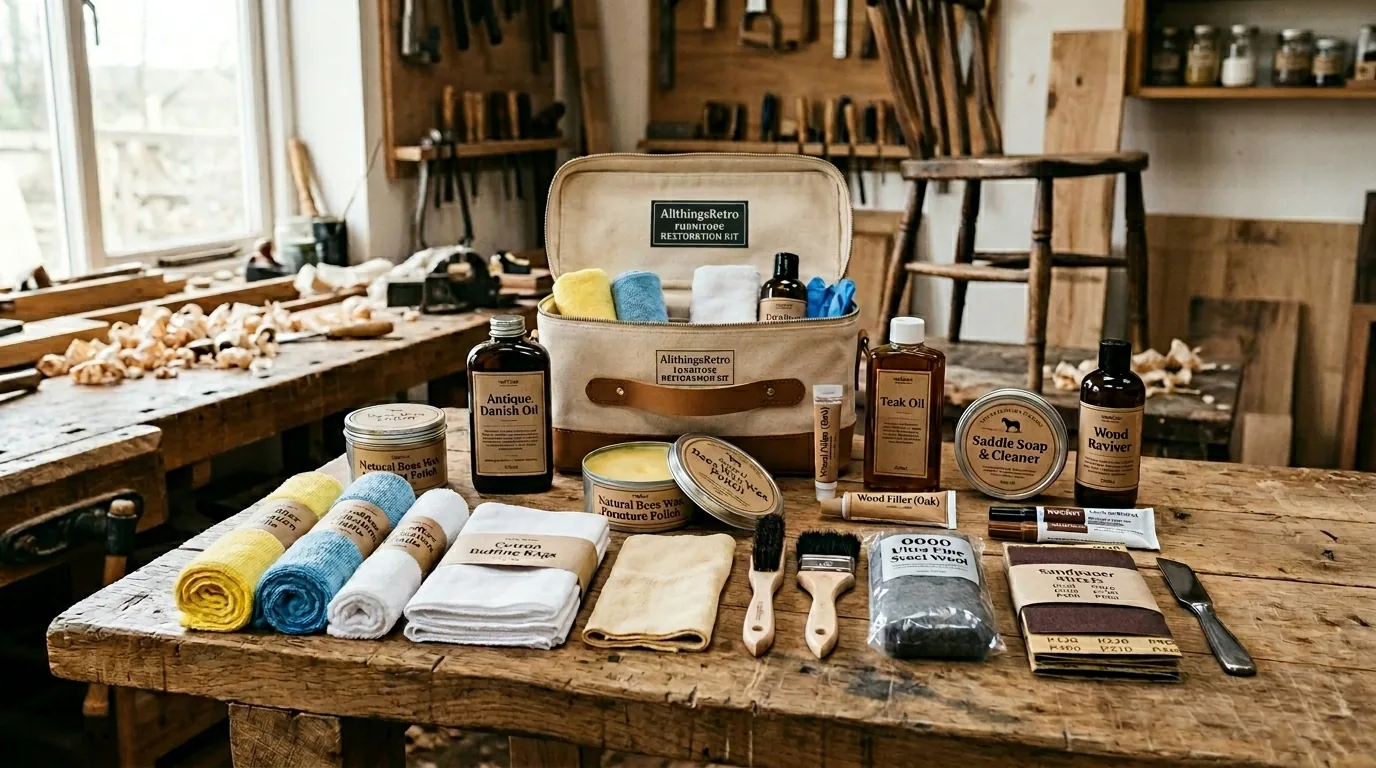
For both teak and rosewood, I use a good quality teak oil or Danish oil. The application technique is similar, but the amount and frequency differ.


Apply a small amount to a lint-free cloth and work it into the surface following the grain. Let it sit for 15 to 20 minutes, then wipe away all excess. The wood should absorb what it needs — any oil left sitting on top will become sticky and attract dust.
For teak
One careful coat is almost always enough. Teak’s natural oil content means it doesn’t need much encouragement. After the first coat dries, assess the result in good light before deciding whether to apply another. More often than not, you won’t need to.
For rosewood
Rosewood tends to drink the first coat quickly, particularly on very dry pieces. Allow the first coat to cure fully — ideally 24 hours — then reassess. A second coat applied lightly is often worthwhile, especially on areas that still look flat or where the grain contrast hasn’t fully returned. After that, stop. The depth will continue to develop slightly as the oil cures.
✔ Warm the bottle: Place it in warm water for a few minutes before use. Warmer oil spreads more evenly and penetrates better, particularly on dense rosewood.
Dealing With Light Surface Scratches
Minor scratches are one of the most common concerns I hear about — and also one of the most frequently over-treated. The first thing I always do is oil the piece and let it dry fully before making any judgement. You would be surprised how many scratches effectively disappear once the wood is properly nourished, because the grain swells slightly and the contrast between scratch and surface reduces.
If a scratch is still visible after oiling, the next step is to try a small amount of very fine 0000 steel wool, used dry and worked very gently along the grain. This can soften the edges of a scratch without removing any meaningful amount of surface. Wipe clean and apply a little more oil to the area afterwards.
For slightly deeper marks that haven’t broken through the wood entirely, a touch of matching wood filler applied carefully and then sanded flush with very fine paper can work well. But this is a last resort, and it’s always worth asking whether the scratch genuinely needs fixing or whether it’s simply part of the piece’s character.
A fine scratch on a sixty-year-old sideboard is not a problem to be solved. It is evidence of a life well lived.
When Sanding Is and Isn’t Appropriate
Aggressive sanding is one of the quickest ways to destroy the value and character of a vintage piece, and I would always encourage exhausting every other option first. That said, there are situations where very light sanding is genuinely the right call.

If the surface has stubborn staining that oil and cleaning haven’t shifted, if a previous finish is badly patchy or bubbling, or if water damage has left raised wood fibres that catch the light, then fine-grit sanding — and I mean fine, starting at 240 and going finer — used sparingly and always along the grain can help. The goal is to address a specific problem, remove as little material as possible, and stop the moment the issue is resolved.
What sanding should never do is attempt to make a vintage piece look factory-fresh. If that’s the aim, you will end up with something that looks like new furniture from a distance and like a damaged antique up close.
✔ Collector’s tip: Furniture that shows honest age but is beautifully maintained commands better prices and more admiration than furniture that has been over-restored. The patina is part of the value. Protect it.
Knowing When to Stop
This is the part I find hardest to teach and the part that matters most. The temptation is always to keep going — one more coat, a little more buffing, one last pass with the cloth. But vintage furniture should not look factory fresh. It should look cared for, respected, and beautifully aged.
The best restorations are the ones where the work disappears and the piece simply looks like the best version of itself. A small mark here and there is not failure. It is history.
Coming Next in This Series
Next I’ll be covering one of the most common concerns people ask me about: how to deal with water rings and surface marks on vintage furniture. Because few things cause as much panic as putting down a glass and finding a white ring the next morning — and most of the time, it’s far more fixable than it looks.
Browsing for your next piece? Explore our current collection of vintage Scandinavian furniture and decorative objects, sourced and described with care.