






Description
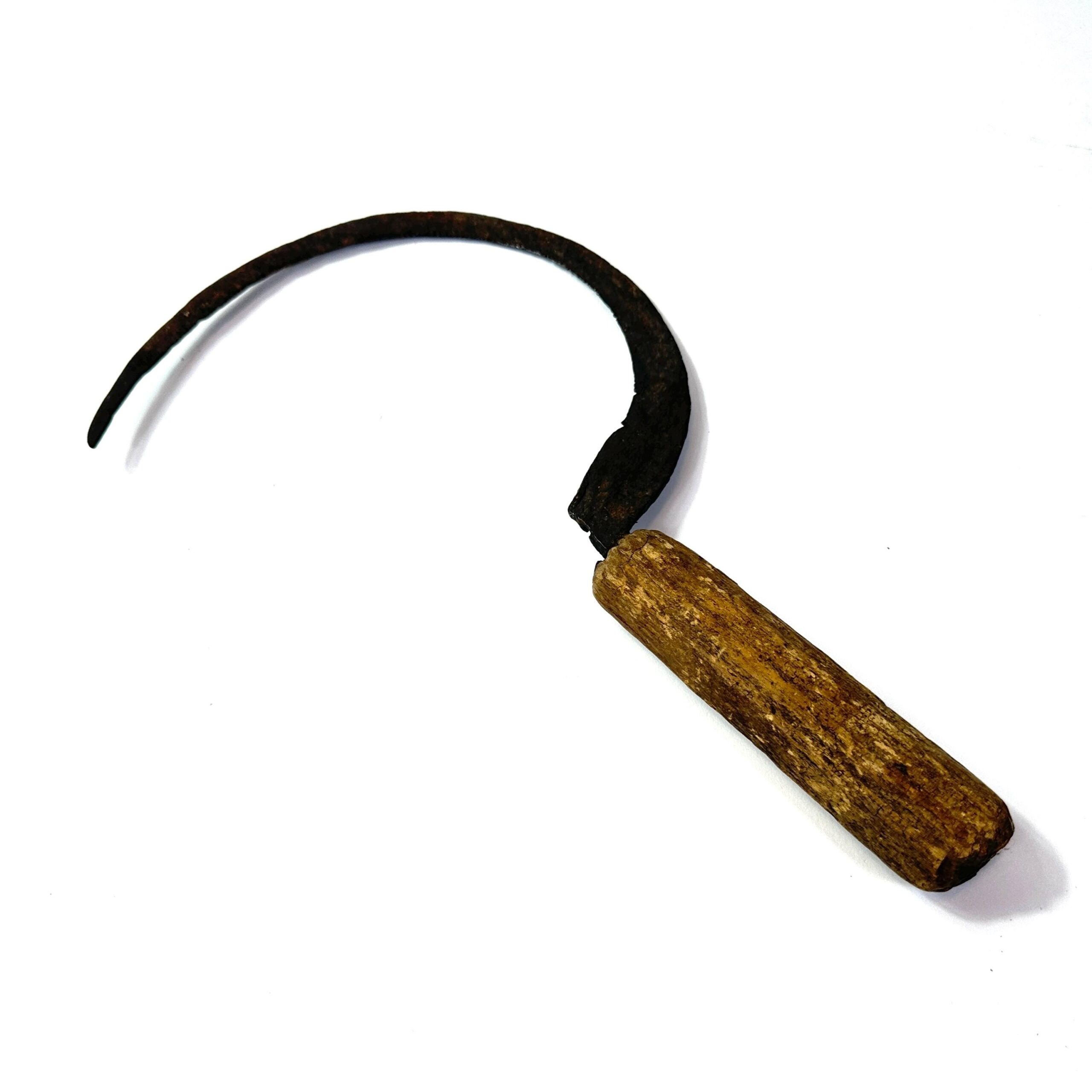
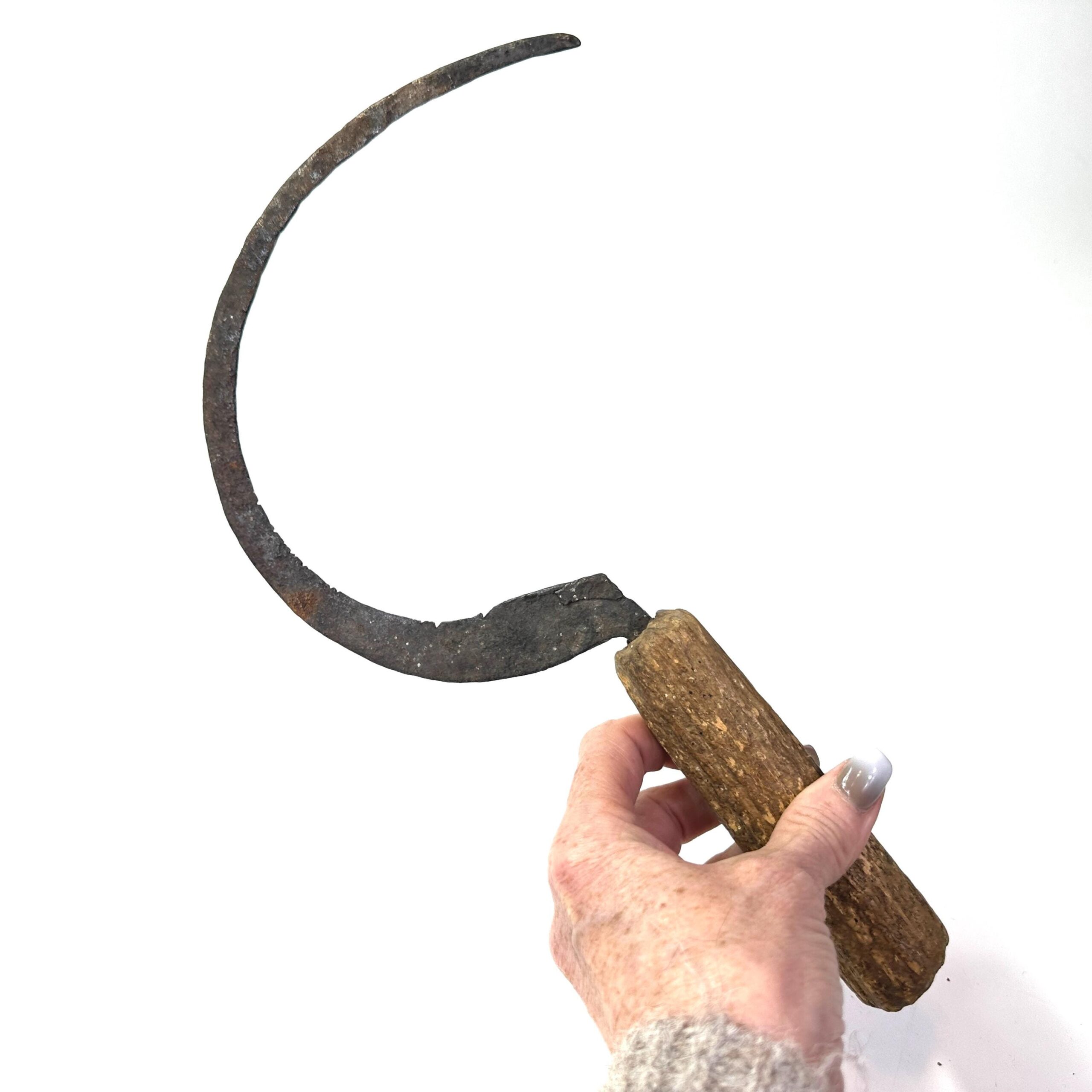
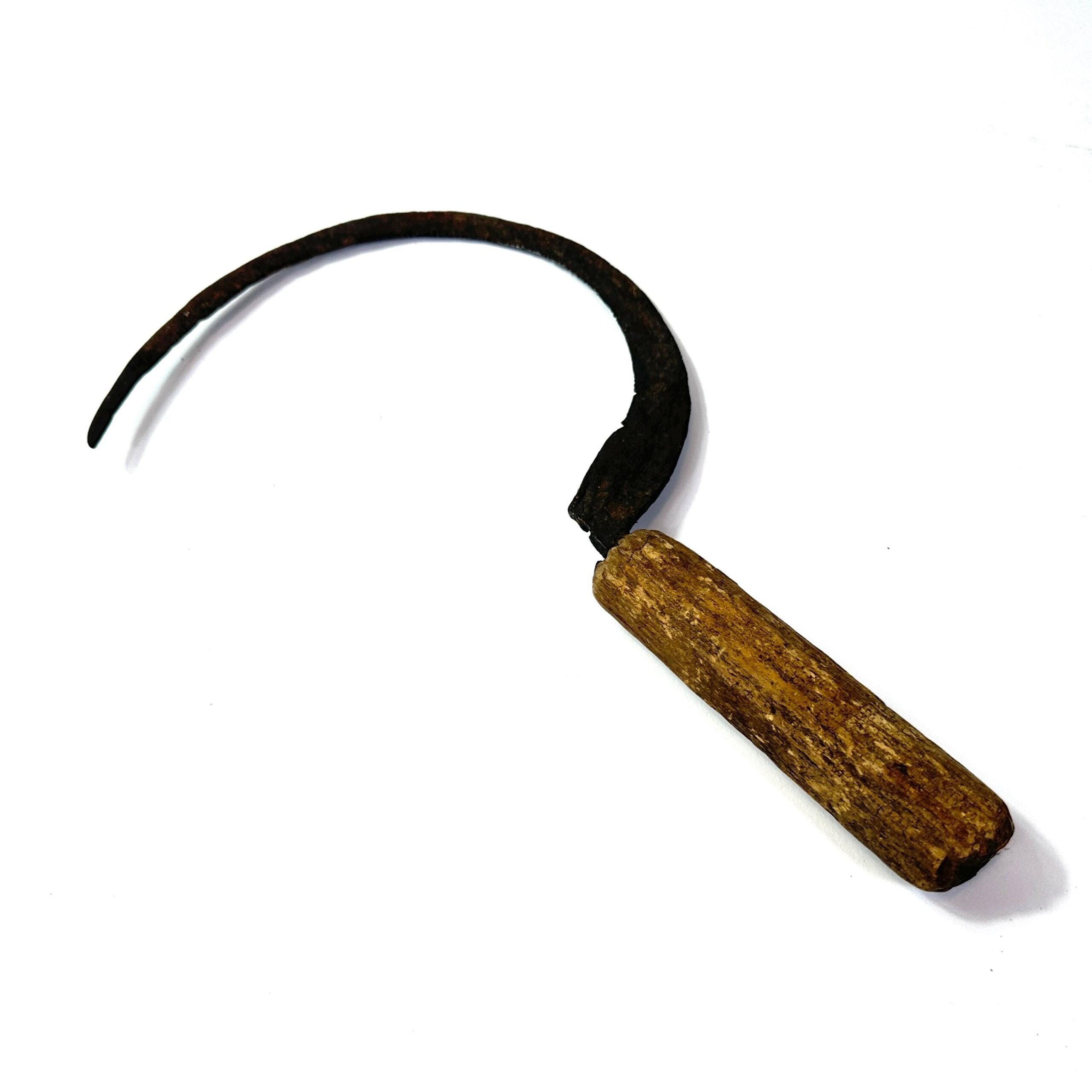
This early hand-forged sickle is the kind of object that carries its history without apology. The curved iron blade and solid wooden grip were shaped by hand — not cast in a factory — and the tool went on to see genuine working use, harvesting and clearing vegetation across its long life. It is not a reproduction. Every mark on it is real.
About the Piece
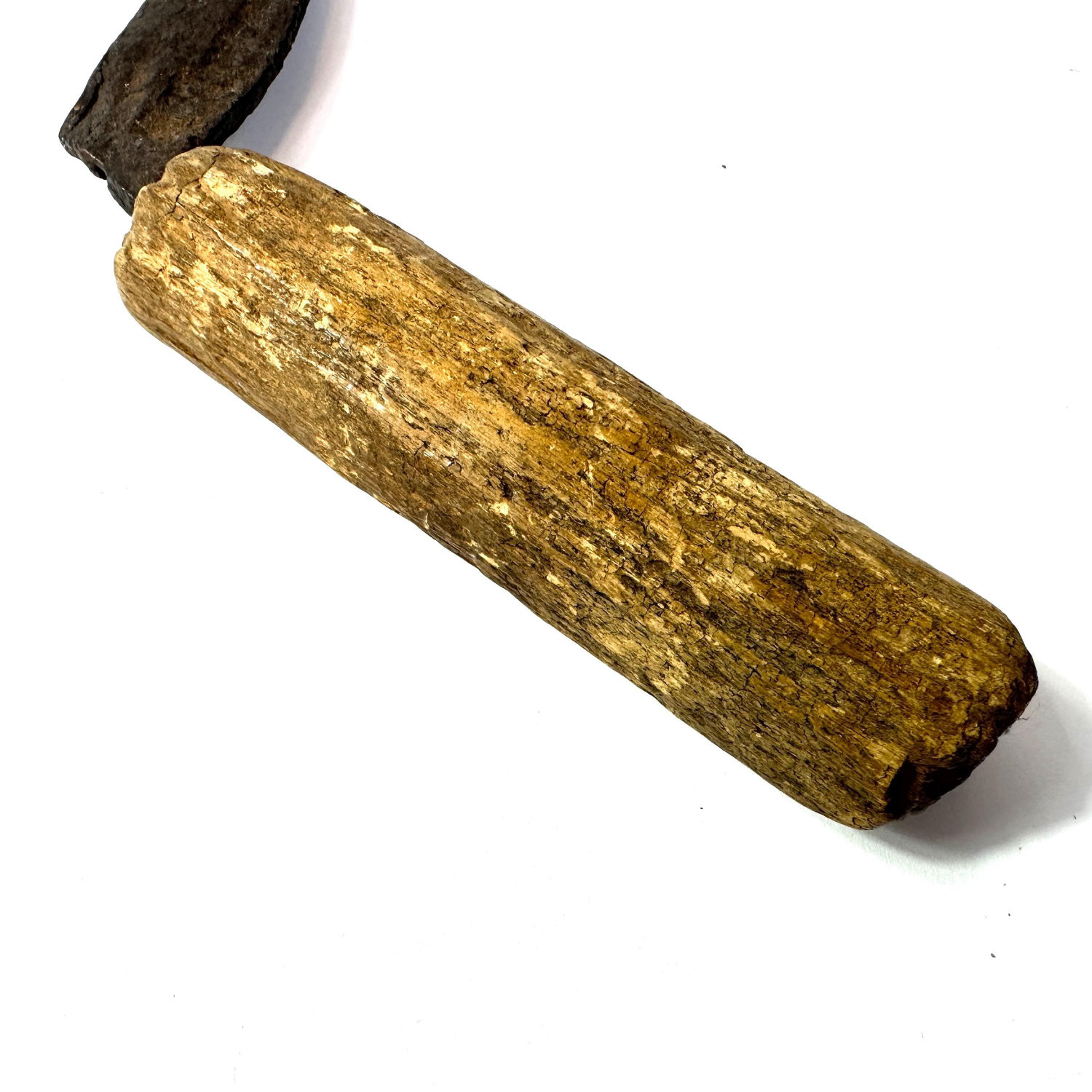
Sickles like this were essential tools in Scandinavian farming life for generations. The hand-forged construction gives the blade a character that machine-made tools simply cannot replicate — slight irregularities in the curve, a texture in the iron that speaks of the forge and the anvil. The wooden handle, worn smooth at the grip, tells its own quiet story of use. Pieces like this are increasingly sought after by collectors of antique farm tools, enthusiasts of rustic and industrial decor, and anyone who appreciates the honest beauty of a well-made working object.
Details & Specifications
- Type: Sickle / cutting tool
- Construction: Hand-forged blade
- Form: Curved cutting edge with fixed grip
- Materials: Iron blade, wood handle
- Overall length: approx. 31 cm (12.2 inches)
- Origin: Scandinavia
Condition Report
- Used condition throughout
- Heavy wear, surface rust, and age marks to both blade and handle
- Strong patina across the iron blade from long exposure and use
- Solid wooden handle with a worn, well-used grip
- Structurally intact — suitable as a display piece
- Genuine working tool, not a reproduction
Why It Endures
There is something deeply satisfying about a hand-forged tool that has done exactly what it was made to do. The patina, rust, and wear are not flaws — they are the record of a working life. Whether displayed in a workshop, a studio, or alongside a collection of vintage farm and agricultural tools, this sickle brings texture, authenticity, and a tangible connection to a way of life that has largely disappeared. It is the sort of object that earns its place on a wall simply by being exactly what it is.


